


What is an activist? And why is it important to teach kids about it so young?
Kids' curiosity allows them to recognize problems in their communities from a very early age. Instead of pushing those big questions for later in life, adults have the ability to support kids by engaging their curiosity and helping them gain problem-solving skills in a safe, age-appropriate way. Kids can be activists by seeing a problem in their classroom, neighborhood, or across the world and finding solutions using the tools accessible to them. Being an activist can look like protesting social justice, climate, or accessibility issues, and it can also include small acts such as standing up for peers, recognizing the undervalued work of sanitation workers, mail carriers, and farmers, and generally spreading kindness and awareness about the topics we care about. Reading about activism is a way to get kids to think critically about why inequality exists, and it can foster confidence to turn their ideas into actions.
I created this book list for kids who, like me, noticed something they wanted to change but were unsure how to address it. Activism is about using whatever skillset or hobby you enjoy (from singing, gardening, and sports to leading and educating) to bring your neighbors and classmates together to make an impact. It is not an individual act, and there is no one right way to go about it. Kids don't need to start from scratch! There are many organizations already doing great work that they can get involved with.
This book list includes biographies of famous historical activists, stories of young activists, and calls-to-action that help kids get started in sharing their thoughts on how to change the world around them. Youth-led movements have a long history of bringing attention to and attempting to fix issues such as lack of media representation, mental health access, and gun violence.
Activism teaches kids to commit themselves to a cause they are passionate about and to persevere in order to make their communities into spaces that are safe, supportive, and equitable. Below are 15 books that are useful in teaching kids and their grown-ups how young people have found ways to lead social movements and organize to create changes, big and small.
Find the full book list on Bookshop or click on the individual titles listed below:
- Change Starts with Us by Sophie Beer (0-3 years)

- What this book is about: A board book that focuses on everyday actions children can take to improve their communities and the environment. The book gives examples of small changes that kids can readily implement—for example, turning off the water while they brush their teeth or picking up litter.
- Why it is useful: Children become more aware of how their actions have an impact on the world. Instead of waiting for other people to act, there are changes kids can make that don't require them to travel outside their home or school. The suggestions in the book motivate kids to act with compassion and responsibility.
- Antiracist Baby by Ibram X Kendi, illustrated by Ashley Lukashevsky (1-5 years)

- What this book is about: Antiracist Baby is a rhyming book that gives 9 concrete steps for kids to recognize and be made aware of race and racism; the last page has conversation starters for grown-ups to have with kids.
- Why it is useful: Kendi teaches that it is never too early to start internalizing racist ideas, so it is never too early to take action to become antiracist. The book can be paired with another of Ibram X Kendi's educational works, How to Raise an Antiracist, for adults to aid kids on their anti-racist journey.
- We Care, A First Conversation About Justice by Megan Madison and Jessica Ralli, illustrated by Sharee Miller (2-4 years)

- What the book is about: We Care, A First Conversation about Justice provides examples of transformative justice and community care from the perspective of a group of classmates. The book emphasizes the importance of knowing your neighbors and community members in order to show up and provide for them in times of need. It describes how to build meaningful connections with the people living around you for mutual benefit.
- Why it is useful: Kids are given the opportunity to share their emotions and brainstorm potential responses to problems around them. The book includes a section called "continuing the conversation" that teaches how to institute each skill and lesson into practice. It emphasizes how to respond to big emotions with communication rather than violence and with care over punishment.
- A is for Activist by Innosanto Nagara (3-7 years)
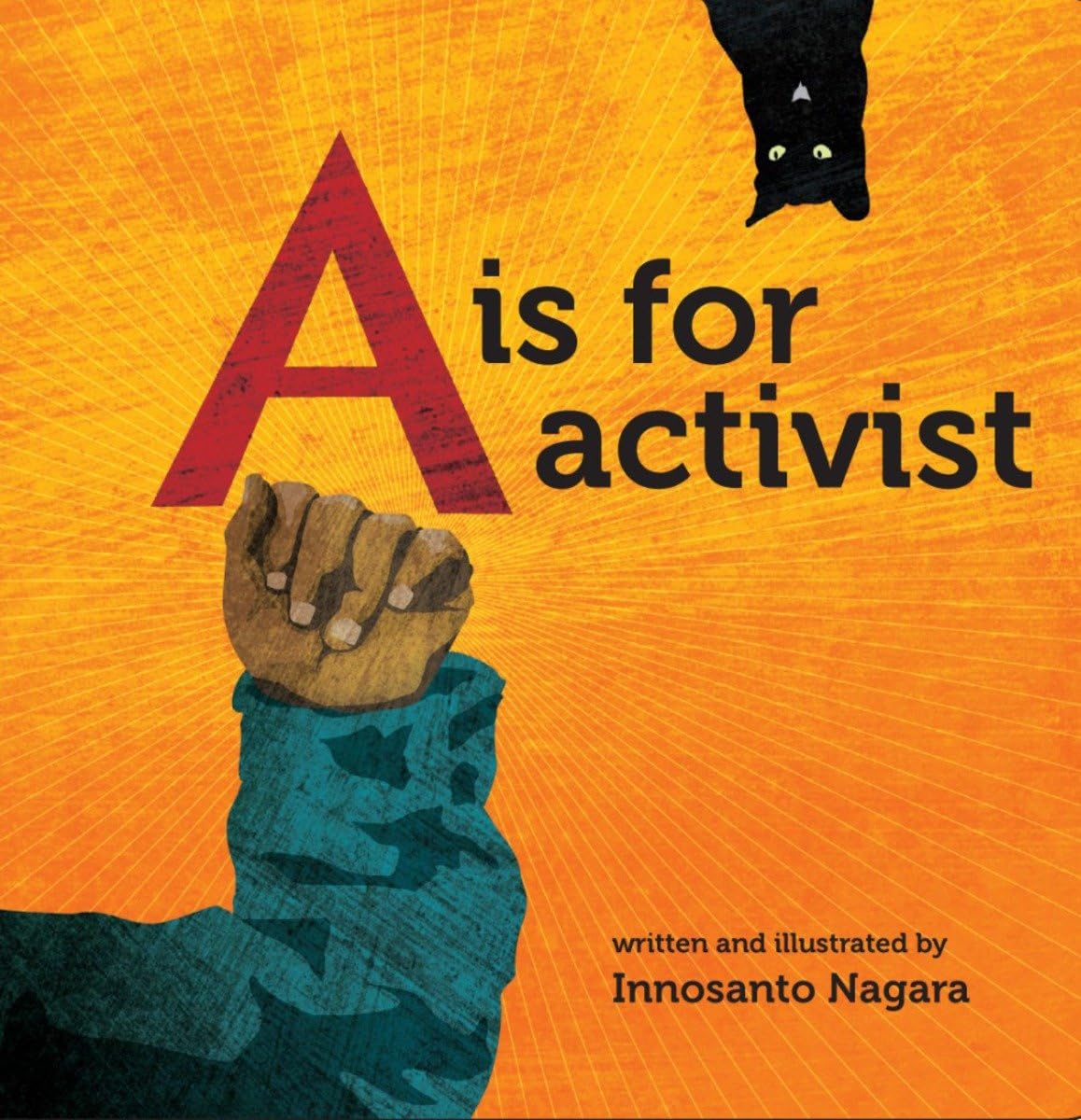
- What the book is about: An ABC book filled with rhymes and alliteration! The book includes political and revolutionary terminology and introduces past activist movements. Search for cats hidden on every page.
- Why it is useful: A is for Activist introduces histories of activism and familiarizes kids with key social justice terms that most never encounter or have the chance to ask questions about in school. It is part of a board book bundle along with Counting on Community and Together.
- Our House is on Fire: Greta Thunberg's Call to Save the Planet by Jeanette Winter (3-8 years)

- What the book is about: Greta Thunberg is one of the most famous youth activists of this generation; this is the story of how she got started. Tired of the lack of attention to climate change by adults, Greta began showing up to the Parliament building instead of school each week to raise awareness about climate change. The book describes how this movement spread to other students in Stockholm, Sweden, and eventually to people everywhere.
- Why it is useful: Kids who are not loud or outspoken can find a way to be heard and inspire others. Using our "voice" does not need to involve physically speaking out; it can instead include starting boycotts, posting on social media, and making signs to spread your message.
- Barrio Rising: The Protest that Built Chicano Park by María Dolores Águila, illustrated by Magdalena Mora (4-8 years)

- What this book is about: Barrio Rising is a bilingual book, incorporating Spanish words with English. Through the perspective of a young girl, it tells the story of a Mexican-American community in Southern California who successfully advocated for a park to be built in their town.
- Why it is useful: Children learn that not every neighborhood has equal access to safe outdoor spaces to play and that everyone can contribute to activism in a way that suits them best (from cooking and singing to directly protesting). Feel free to pull up pictures of the actual Chicano Park after reading!
- The Artivist by Nikkolas Smith (4-8 years)

- What the book is about: The main character, a young child, loves to paint and help his community. Becoming an artivist (artist+activist) is his way of combining these hobbies.
- Why it is useful: This call-to-action book explains that kids don't need to wait until they are older or have more power before they act. Activism can and should include doing something you love with the tools you already have—in this case, art.
- Kamala and Maya's Big Idea by Meena Harris, illustrated by Ana Ramírez González (4-8 years)

- What the book is about: Kamala and Maya decide they want to use the outdoor space surrounding their apartment building to build a playground for all of the children living there. They encounter setbacks from their parents and the landlord, but they also find help from neighbors and teachers when they refuse to give up on their plan.
- Why it is useful: Activism doesn't have to change something huge; it can be finding a way to improve your community and persisting until you implement it. Kamala and Maya demonstrate the determination required to be an activist. Both children and adults need help to accomplish goals, but if you keep trying, you will find people willing to support your efforts.
- Stand up! Speak up! A Story Inspired by the Climate Change Revolution by Andrew Joyner (4-8 years)

- What the book is about: A young girl sees the vast destruction of the environment on the news and encourages her parents to attend climate rallies and speak at city hall meetings.
- Why it is useful: Activism isn't easy and problems aren't quickly solved. With only a few words per page, it spreads the impactful message that when kids are made aware of the issues surrounding them, all it takes to get started is the initiative to stand and speak up!
- Sometimes People March by Tessa Allen (4-8 years)

- What this book is about: This book explains what marches are and why people participate in them. Marches are compared to ants marching and marching bands to demonstrate the power that comes with getting together for a common cause. The story shows that change begins by asking questions and being willing to learn.
- Why it is useful: A helpful book before attending a march with little ones. It can help address fears that both kids and adults may have about marches, protests, and other social justice gatherings.
- No Voice Too Small: Fourteen Young Americans Making History edited by Lindsay H. Metcalf, Keila V. Dawson, Jeanette Bradley, illustrated by Jeanette Bradley (5-9 years)

- What this book is about: Each page showcases the true story of a young activist alongside a poem and a thought-provoking question or practical tip to encourage kids to think critically about the issues they care about.
- Why it is useful: It gives children specific and actionable examples of strategies to apply to their activism and empowers them to believe in their ability to create positive change. For more examples of young activists, these authors also wrote and illustrated No World Too Big: Young People Fighting Global Climate Change.
- More than Peach by Bellen Woodard, illustrated by Fannie Liem (4-7 years)

- What this book is about: A true story about Bellen Woodard's inclusive school supply brand that she created before the age of ten. The book explores her journey in challenging the assumption that skin color crayons are peach-colored. Through creating and selling art supplies, she celebrates the fact that skin color can be "any number of beautiful colors."
- Why it is useful: Not only does More Than Peach teach kids about the importance of representation, it shares the real process of a young child recognizing a situation that could be improved and using the people around her to help address it.
- Something, Someday by Amanda Gorman, illustrated by Christian Robinson (4-8 years)

- What this book is about: Something, Someday is a message for activists about dreaming for a better world. The protagonists recognize issues around them, and they recognize that no problem is too big for them to try to fix. They are hopeful that their small gestures will build up to create lasting change.
- Why it is useful: It empowers kids' voices, affirming that they are able to recognize the difference between right and wrong. It additionally emphasizes that a problem may not be solved right away or by one kid alone, but it doesn't mean we should quit.
- Oh, The Things We're For! by Innosanto Nagara (4-8 years)

- What this book is about: Oh, The Things We're For! explains different social injustices and focuses on the ways we can eradicate them. It affirms that kids not only see what is wrong around them but that they are able to imagine realistic alternatives.
- Why it is useful: Nagara teaches complex social issues in understandable ways. Simultaneously, he recognizes kids as strong and smart leaders. Kids not only have questions, but they have answers.
- Let the Children March by Monica Clark-Robinson written by Monica Clark-Robinson, illustrated by Frank Morrison (5-9 years)

- What this book is about: A brother and sister get involved in a Civil Rights protest against Jim Crow segregation. The book shares an age-appropriate history of the racial violence protesters faced while emphasizing themes of bravery and resilience.
- Why it is useful: Reading about past activism is a great way to learn how to become an activist in the present. It also shows that creating change is not usually easily or quickly accomplished but can require dedication in the face of adversity.
*This post contains affiliate links. Thank you for your support!


