


It's the season of bats, ghouls, pumpkin spice lattes, and trick-or-treating.
But let's be honest: I bought the Halloween costumes in August, because if you wait until October, all that's left is a sad banana suit. I also have zero sewing skills, so a handmade costume is not happening in this house.
The decorations are up and the pumpkins are going out, but we won't be carving them this year. Last year our jack-o'-lanterns invited some little visitors to our doorstep, and I cannot do that again.
Today we're talking about Dyslexia Awareness Month, some books about dyslexia that we love, and a Halloween classic.
Dyslexia Awareness Month
October is Dyslexia Awareness Month, and it's a big one for our family because both of my kids have dyslexia.
When most people hear "dyslexia," they think solely of reading and spelling struggles, or they see the diagnosis as a deficiency. But kids with dyslexia aren't deficient. Their brains are simply wired differently, and that wiring comes with its own advantages.
To me, this month is about understanding what dyslexia is and what it isn't. Yes, there will be challenges with reading, spelling, and sometimes things like working memory or processing speed, and kids will need the right learning intervention. But that's only part of the picture.
What people sometimes miss is that dyslexic brains process information differently, and that often comes with real strengths: creativity, big-picture thinking, and a knack for finding fresh, original solutions to problems.
Those strengths, of course, will look different in every kid, even in the same house. My twins have completely different profiles, each with their own mix of challenges and strengths. Watching them, I'm reminded all the time that dyslexia is a different way of thinking, not a lesser one.
I've also had people assume that because my kids have dyslexia, they must not like books. Not true! My kids love books. They listen to audiobooks and Read-To-Me books on Epic, my husband or I read aloud to them every night, and they read books on their own in bed before lights out (and sometimes well after, if I'm being honest).
A dyslexia diagnosis doesn't mean a child won't love reading. Sometimes it just means reading looks a little different.
Books About Dyslexia
Here are some books that have meant a lot to our family. They're wonderful for families on this same journey, and for anyone who wants to understand dyslexia a little better. Books like these help normalize learning differences and shed light on what dyslexic kids experience every day.
(This post contains affiliate links to booklove's Bookshop.org page. If you buy through them, booklove earns a small commission at no extra cost to you, and it supports independent bookstores too.)
Books to read with your kids:
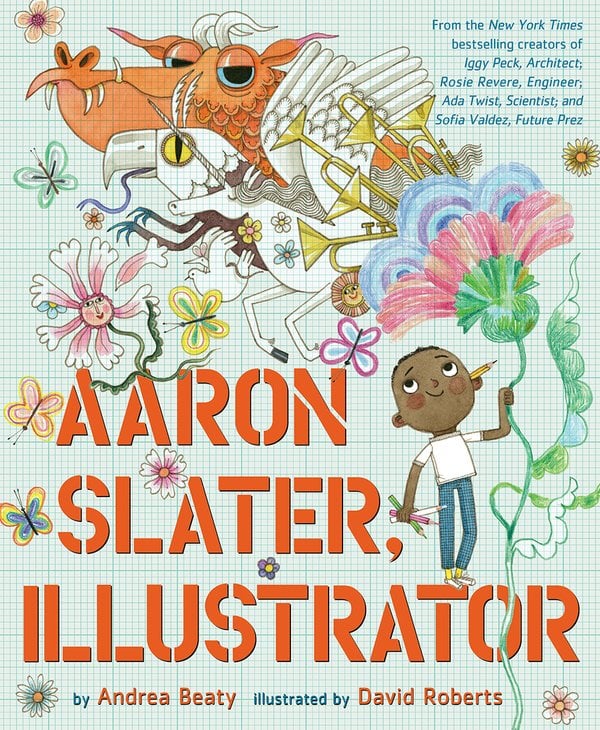
Aaron Slater, Illustrator by Andrea Beaty, illustrated by David Roberts
Picture book
Aaron loves stories, but reading and writing don't come easily to him. When his class is asked to write stories of their own, he has to find his own way to tell one. This is the book my daughter connects with most. She's an illustrator too, and many walls and tables in our house have been home to her drawings. Like Aaron, she tells her stories through art. And like Aaron, with the help of some wonderful teachers, each day gets a little less rough.
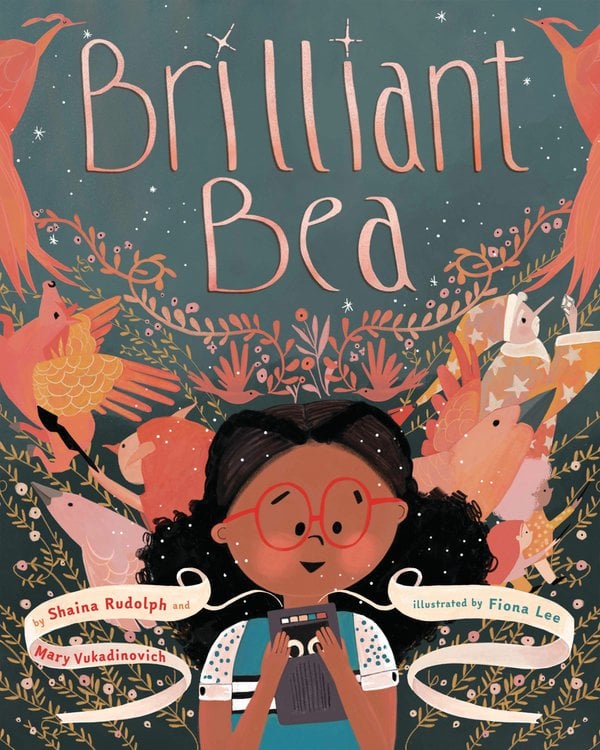
Brilliant Bea by Shaina Rudolph and Mary Vukadinovich, illustrated by Fiona Lee
Picture book
Bea is a born storyteller, but reading and writing at school are a daily struggle. When a kind teacher hands her an unexpected tool, Bea finds a new way to share her stories. This one resonates with both kids, especially my son. They know what it's like to feel stuck and embarrassed, and when Bea says, “it's like words jump around the page,” they understood exactly what she meant. They also saw themselves in Bea when she finds her own way to express herself. It shows the challenges and how kids with dyslexia can be empowered, which makes it a great read for kids with and without dyslexia.
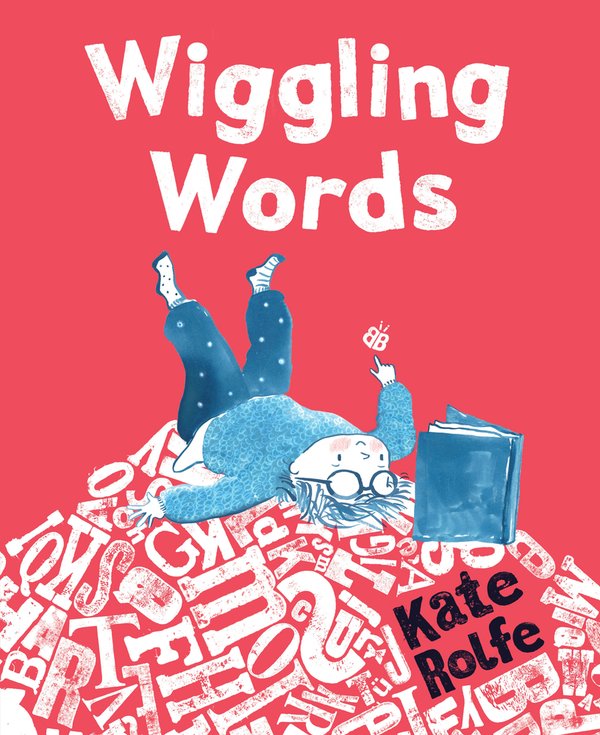
Wiggling Words by Kate Rolfe
Picture book
A child wants to finish a story, but the words keep wiggling, jiggling, and jumping around the page. Frustrated, they keep looking at the letters until they discover a creative way to turn them into a whole world of possibilities. The first time my kids read this book, they said, "That happens to me!" Then they described in great detail exactly what happens when words move and jump for them. I loved that it opened that conversation. It's easy to think dyslexia just means mixing up b and d, but hearing them describe it gave me a real glimpse into what they're working through every time they read.
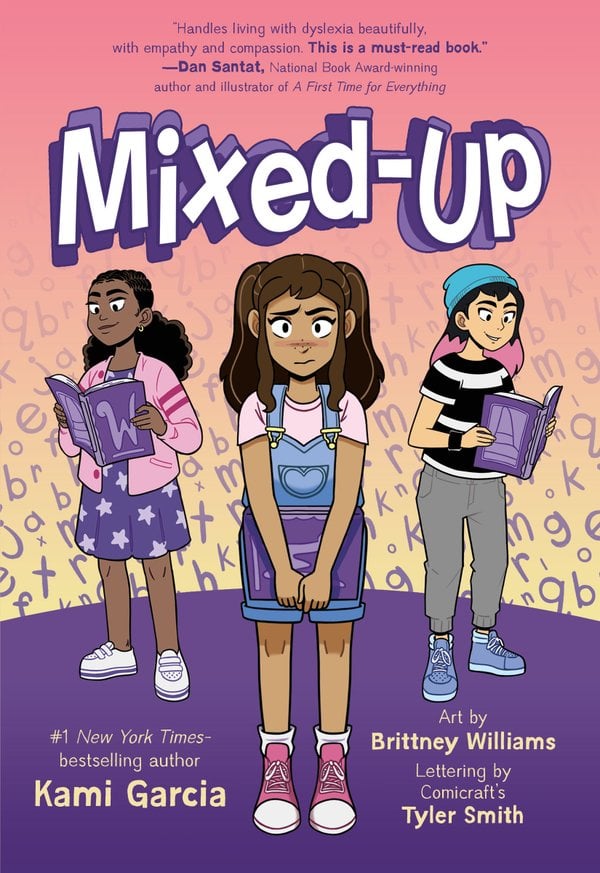
Mixed-Up by Kami Garcia, art by Brittney Williams
Middle grade graphic novel
Stella is a fifth grader who loves gaming with her friends, but schoolwork keeps piling up and reading takes her forever. When her family and teachers realize something more is going on, a dyslexia diagnosis changes everything. My kids were completely engrossed. The story has real stakes: Stella feels like she isn't smart, pulls away from her friends, and is so relieved when she finally gets answers and teachers who get her. My kids aren't in fifth grade, and their journey has looked different, but they recognized so much of what Stella was feeling. (Math comes easily to them, just like it does for Stella!) It's relatable and uplifting, and I won't spoil the ending.
More Books to Read With Your Kids
A few more we've read or have on our list:
- A Walk in the Words by Hudson Talbott (picture book): The author-illustrator's memoir of growing up as a kid who loved to draw but struggled to read. He learns that taking his time with words is okay, and that his way of seeing the world is a strength.
- It's Called Dyslexia by Jennifer Moore-Mallinos (picture book): A young girl finds letters getting jumbled when she tries to read, until she learns she has dyslexia and gets the help she needs. A gentle, straightforward introduction for younger kids.
- Thank You, Mr. Falker by Patricia Polacco (picture book): Based on the author's own childhood, this is the story of Trisha, who loves books but can't read and is teased by classmates. Then a new teacher finally sees what's going on and helps her learn.
- Sparkle by Alexandra Hoffman, illustrated by Beatriz Mello (picture book): Jasmine loves stories but struggles with reading and writing because of her dyslexia and dysgraphia. When her class is asked to write a creative story, she finds her own way to tell one, without words.
- Here's Hank by Henry Winkler and Lin Oliver (early chapter book series): Hank is a funny, big-hearted second grader with dyslexia, based on Henry Winkler's own childhood. My kids read Bookmarks Are People Too! at school and thought it was hilarious.
- Percy Jackson and the Olympians by Rick Riordan (middle grade series): Percy has dyslexia and ADHD, and in the story it's because his brain is wired for ancient Greek. Riordan based Percy on his own son, who has dyslexia and ADHD and loved Greek myths. It's next on our to-read list, as soon as my kids finish Harry Potter.
For the Parents and Caregivers:
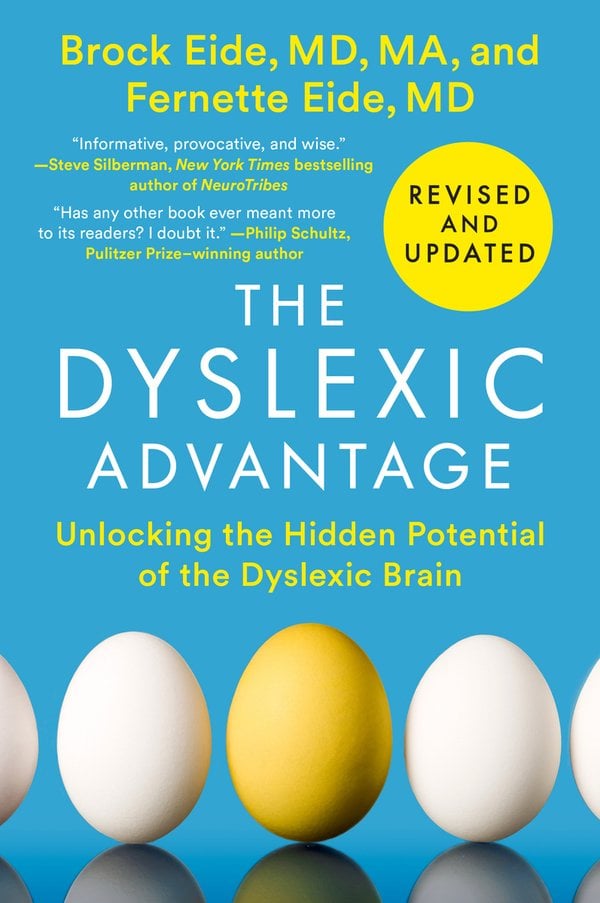
The Dyslexic Advantage by Brock L. Eide, MD, MA, and Fernette F. Eide, MD
This was the first book I read after my kids' diagnosis. I wanted to educate myself, help my kids navigate what was ahead, and figure out how to nurture their strengths. I also wanted them to grow up seeing their dyslexia as a kind of superpower, not something holding them back. This book gave me just that. It's grounded in science and real-life stories, and it shows how the same brain wiring that makes reading tricky can also come with real strengths, like creativity, spatial reasoning, and problem-solving. If you're a parent figuring out what dyslexia means for your child, it's one I'd highly recommend.
A small detail I love: Aaron Slater, Illustrator, Brilliant Bea, Mixed-Up, Wiggling Words, Sparkle, and The Dyslexic Advantage are all printed in fonts designed to be easier for dyslexic readers to read.
Classic Corner: Halloween Edition
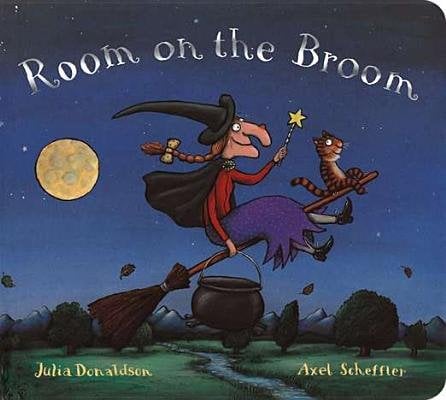
Room on the Broom by Julia Donaldson, illustrated by Axel Scheffler
Officially, this is our October book. Unofficially, it also comes off the shelf in August, February, and pretty much any time the mood strikes. A kind witch keeps picking up new animal friends on her broom (it gets a little crowded up there), and when trouble shows up, they all pitch in to help her out.
I love the rhyming. It has the kind of rhythm that makes reading aloud feel effortless, and before long the kids are finishing the lines with me. And it's the perfect amount of Halloween: a witch, a dragon, a cauldron, and nothing that'll have anyone sleeping in my bed that night.
Coming soon: Part 2, our favorite fall and Halloween reads!
Your Turn
What's your family reading this October? Do you have a favorite book about dyslexia or learning differences we should add to our list? We'd love to hear. Send us a message or tag us on Instagram @booklove.box.
Happy Reading,
Kimberly


